
Wanted
Leaks, clogs and cold showers
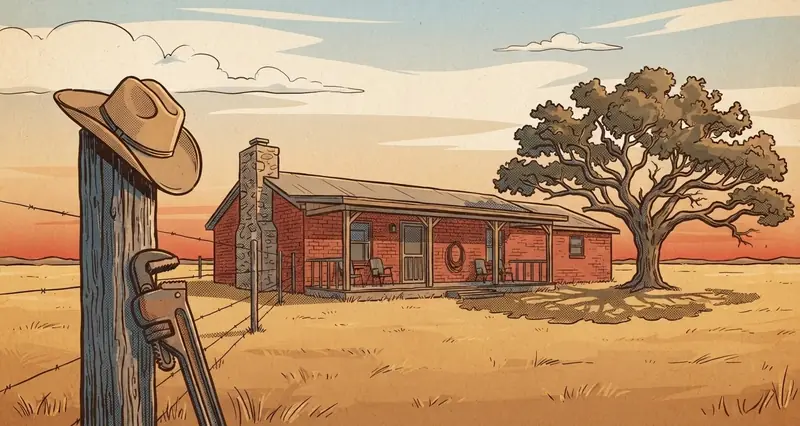
Howdy, Dallas–Fort Worth. The Cowboy Plumber tracks down household plumbing trouble and fixes it the polite way. First comes a plain explanation and the price. After that the wrench stays holstered until you give the nod.
- The price comes before the work
- A plain-spoken account of what broke
- Tested before we leave, floor left clean
The usual suspects
Eight kinds of trouble we round up
Each one has its own page with the signs to watch for, how the repair goes, and what is particular about it in North Texas.
From howdy to handshake
How a visit goes
Big job or small, a leaky faucet or a whole sewer line, the visit runs in this order.
Howdy
The visit starts with a hello and a few questions: what you have noticed, when it started and how old the house is.
A proper look
The problem is tested and traced to its cause. No diagnosing from the doorway.
The price, up front
The plumber tells you plainly which part gave out, what caused it and what setting it right will cost.
Your say-so
Not a wrench turns before you agree. Need a while to mull it over? Take all the time you like.
The fix, tested
The repair is made, then proved: pressure on the line, water down the drain or heat at the tap.
A clean goodbye
The plumber tidies up the spot, walks you through what was done, and only then says so long.
House rule
No tall tales
The price comes ahead of the work, along with a straight account of what went wrong. After that, you decide.
How we work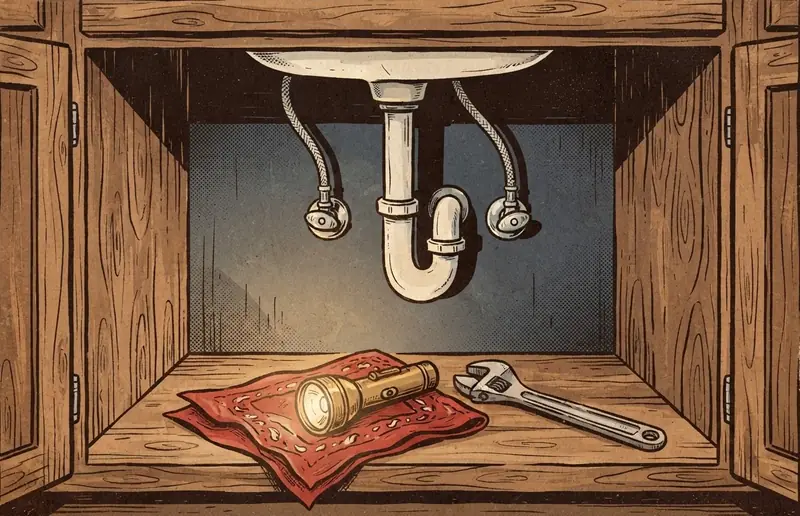
Worth knowing
Find your shut-off valves before you need them
The quickest way to limit water damage is a valve you can find in the dark. Take ten minutes on a calm day and locate these three. If one will not budge, do not force it. A stuck valve is better replaced on a quiet afternoon than discovered during a flood.
- The main shut-off stops water to the whole house. In most North Texas homes it sits in a ground box near the meter by the street, and many houses have a second one where the line comes in. A lever handle is closed when it sits crosswise to the pipe, and a round handle closes clockwise.
- The water heater has a valve of its own, up top on the cold line that fills the tank. Shut it and a leaking heater stops taking on water.
- The fixture stops are the small valves under each sink and behind each toilet. They shut off one fixture and leave the rest of the house running.
Before a blue norther
Six chores before a hard freeze
North Texas freezes are rare enough to catch a house off guard. When the forecast drops well below freezing, run through this list the afternoon before.
Unhook every garden hose
A hose left on the spigot traps water in the valve, where it can freeze and split the pipe.
Cover the spigots
An insulated cover over each outdoor faucet costs little and takes a moment to fit.
Open the cabinet doors
Sinks on outside walls stay warmer when room air can reach the pipes underneath.
Let the faucets drip
A slow drip of both hot and cold keeps water moving through pipes in outside walls and the attic.
Keep the heat on
Leave the thermostat at a steady setting day and night, even if you are leaving town.
Know your main shut-off
If a pipe does split, closing the main is what limits the damage. Burst pipes often show themselves during the thaw.
Fair questions
Plain answers
What kind of plumbing work do you do?
Home plumbing: leak detection and repair, drain cleaning, water heaters, toilets and faucets, kitchen and bath plumbing, slab leaks, sewer lines and outdoor plumbing such as hose bibs and yard lines. Each has its own page with the signs to watch for and how the repair goes.
Which parts of Dallas–Fort Worth do you serve?
We work across the Metroplex, including Frisco, Arlington, Dallas, Irving, Plano, Prosper, McKinney and Lewisville. We wrote up each of those towns separately: what its houses are like, and which plumbing troubles like to visit them.
Do I hear the cost before anything gets fixed?
Yes ma'am, yes sir. The plumber takes a proper look, tells you which part quit and the reason, and names the price. Whether the job goes ahead after that is your call.
Water is leaking right now. What should I do first?
Close the main shut-off valve first. Look for it in a ground box by the meter out near the street, or at the spot where the supply pipe comes into the home. If the water heater is the culprit, there is a handle on the cold pipe just above it. Turn that one off. Keep away from wet outlets and appliances, and move rugs and furniture out of the water if you can do it safely.
Why do North Texas homes have so many slab leaks and sewer problems?
Mostly the ground. Our clay soil puffs up after rain and pulls back in a drought, and most houses here rest on a concrete slab that has pipes running below it. That movement stresses water lines and shifts sewer joints. Hard water and the occasional hard freeze add their share of wear.
Do you clean up after the job?
Yes. Before heading out, the plumber runs the repair to prove it holds and tidies the spot where the work was done. If a wall or floor has to be opened to reach a pipe, you will know where and how big before it happens.
Elsewhere in the Metroplex
- Flush Hour Plumbing of CarrolltonPlumber in Carrollton, TX
- Rapid Response Plumber of GarlandPlumber in Garland, TX
- Wylie Plumbing Co.Plumber in Wylie, TX
- Lone Star PlumberPlumber in DFW
- Longhorn PlumberPlumber in DFW
- Steady Hand PlumberPlumber in DFW
- Texas Tough PlumberPlumber in DFW